Robert Cannon
Professor S. Classen
COMS 507
27 May 2011
Down to the Wire: Do Class Issues Get the 2nd Class Treatment?
or
How America Learned to See Class Instead of Race
1. The Cold Open
In 2002, a new television show emerged which would win a total of zero Emmys and would be largely ignored by the public. However, by the end of the decade The Wire (2002) would be listed on dozens of critics’ “Best Television Show Ever” lists (Dietz 2010), garnering more critical acclaim than arguably any other show. The result was clear: those who saw the show, loved it. The problem was, no one was watching.

Over the course of five seasons, the HBO cop drama broadcasted a message different from typical police shows, such as Hill Street Blues (1981) and Miami Vice (1984) some twenty years earlier. But while critics loved the program, and with HBO drawing national attention with The Sopranos (1999), Curb Your Enthusiasm (2000), Oz (1997), and Sex and the City (1998), it may seem odd that such a highly extolled show would go largely ignored by viewers.
The show’s creators were interested in bringing a new subject matter to the small screen, a subject rarely discussed in modern television: class determination. The producers, with creator David Simon at the helm, were interested in bringing to light the concept that some members of our socioeconomic system were never going to climb that economic ladder; they were pre-determined to be lower-class citizens and this trend would continue for generations to come.
Given that the viewpoint of the producers was to begin a tele-discussion surrounding this topic, it begs the question, what are the differences between the way in which television critics viewed the show and the way in which fans viewed it? More specifically, are critics or fans more likely to see The Wire in a class-determinism light? Moreover, once one group (or both/neither) is established as having received the intended messages from the producers, what can we infer from the way in which one group influences the other? By answering such questions as these, this paper seeks to further understand: are Americans capable of seeing class determinism, or do they mask it with issues of gender, sexual orientation, age, or especially race? By understanding the answer to such a question, we can begin to then critique the ever-changing status of, not only American pop culture, but cultural studies as a whole.
By utilizing a qualitative textual analysis to both the show and reviews, this paper establishes The Wire as a text which deals with class determinism and then seeks to better understand the reception of this message upon critics and viewers. By examining historical reviews of the show and comparing them to the discussions on blog and fan websites, we can glean an insight into whether David Simon’s message was getting through or not. While this is certainly not a new approach to understanding a text, it is, to the best of my knowledge, the only time this show has utilized the comparison of critics to fans in order to uncover whether either or both of them understood what the producers wanted them to see: class determination. Thus, this paper will first define The Wire as a text which deals with class determinism, then will review literature which helped shape the formations of the primary research, before finally discussing the conclusions of said research.
The Wire is a great text for this particular study because, unlike other police procedurals, this show was created to begin a dialogue about the subject of money. The Wire, was ahead of its time for audiences; it was one of the first shows to openly address class stratification and determination through a postmodern lens, which runs counter to the traditional American idealism which was prevalent after the September 11, 2001 attacks. That idealism included, in part, the masking of class stratification through the use of racial discourse.

2. The Opening Theme of Economic Determination
The Wire goes where few shows have gone before. While passive viewers might misinterpret the show to be about race (most likely because of the large number of black actors), the show is actually addressing class. More specifically, the class discourse is about economic stratification and determination, pure and simple. By this, I mean that the show centers on the theme that those who are poor are destined to stay poor. As Sut Jhally and Justin Lewis point out, “We are used to seeing class issues treated in other ways [than the frank unequal and unfair depiction of class barriers] on prime-time television. When class barriers are presented, it is invariably to show them being overcome, not reinforced (Jhally and Lewis 1992).” This is evident in The Wire, not only by comparison of the wealthy to poor in the traditional sense, but there is also a class hierarchy within the projects; the ghetto understandings of class break into smaller bits. Clearly Avon Barksdale is on top, he has all the power and money. Stringer Bell and a few close aids to Avon are just below, while the ‘soldiers’ round out the upper-class (to be clear, all of this is a microcosm of class, all taking place within the Baltimore ghetto). Those who live in the housing projects but do not sell drugs are middle-class, while the lowest of the low are the addicts and upward mobility is not tolerated.
The episode “The Buys” provides a typical look into this issue. In the opening scene, a dope fiend bothers some of the drug soldiers sitting on a couch in the ghetto courtyard. The addict asks if they have any free dope, but gang members Bodie and Wallace yell at him to leave. D’Angelo, a higher ranking officer than Bodie and Wallace, reprimands them for yelling at the addict:
D’Angelo: Yo, why you act like that?
Bodie: What, for these junkie motherfuckers?
D: So, you’re just gonna take his money all day and treat him like a dog?
B: How I supposed to treat him?
D: I don’t know, but you ain’t gotta punk him like that.
B: What, the customer’s always right?
Wallace: We’re in the projects. The customer be fucked up. You can’t give these niggas shit.
D: Why not? Why can’t you? Shit, everything else in the world get sold without people taking advantage. Scamming, lying, doing each other dirty. Why it gotta be that way with this?
B: ‘Cause they dope fiends.
Clearly, there is a large disregard for the dope fiends, who are stratified beneath the gang members. A similar conversation could have been created between police officers depicting the difference between the cops and the criminals (a more thinly veiled example of wealthy and poor), but the message might have been clouded; viewers might mistake the maltreatment of a black criminal as being racial discrimination, or they might confuse maltreatment of a white criminal as a critique about the abuses of police power.
Later in the same episode, D’Angelo tries to teach Bodie and Wallace how to play chess. In so doing, he reveals the show’s clear message about class determination:
D’Angelo: See this? [Kisses the king chess piece] This is the kingpin. And he the man. You get the other dude’s king, you got the game. But he try to get your king, too. So you got to protect it. Now, the king, he move one space any direction he damn chooses, ‘cause he’s the king. Like this, all right? But he ain’t got no hustle. But the rest of these motherfuckers on the team, they got his back. And they run so deep, he really ain’t gotta do shit.
Bodie: That like your uncle [Avon].
D: Yeah, like my uncle. Now, you see this? This the queen. She smart and she fierce. She move any way she want and as far she want. And she is the go-get-shit-done piece.
Wallace: Remind me of Stringer [Bell].
D: And this over here is the castle. It’s like the stash. It moves like this.
W: Dog, stash don’t move, man.
D: How many times we move the stash house this week? And every time we move the stash, we gotta move a little muscle with it, right? To protect it.
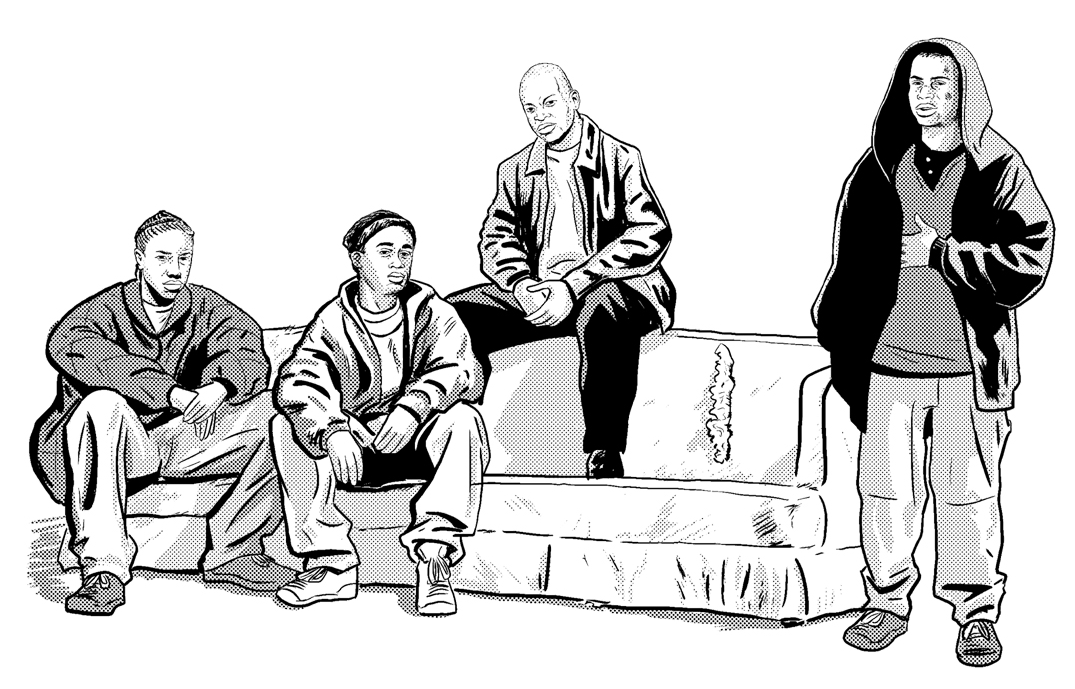
B: True, true. You right. All right, what about them little
bald-headed bitches right there?
D: These are the pawns. They like the soldiers. They move like this, one space forward only, except when they fight. Then it’s like this. They like the front lines. They be out in the field.
W: So, how do you get to be the king?
D: It ain’t like that. See, the king stay the king. Everything stays who he is… Except for the pawns. If the pawn makes it all the way down to the other dude’s side he gets to be queen. And like I said, the queen ain’t no bitch. She got all the moves.
B: All right, so, if I make it to the other end, I win?
D: If you catch the other dude’s king and trap it, then you win.
B: All right, but if I make it to the end, I’m top dog…
D: Nah, yo, it ain’t like that. Look, the pawns, man, in the game, they get capped quick. They be out the game early.
B: Unless they some smart-ass pawns.
D’Angelo clearly illustrates to Wallace and Bodie that they are merely pawns within the stratified game of drug dealing and they will remain as such. If, as Bodie puts it, they are some smart-ass pawns, they might have the opportunity to transform themselves into a queen, but they can never become king, no matter how hard they try or how smart they are. This metaphor falls in line with the ideology of the show: class position is fixed. By the end of the series, all three characters would be dead, sacrificed for a greater strategic advantage, much like the chess game they discussed; they were, after all, pawns.
Earlier in the series, from the episode “The Detail,” the same trio are sitting on a couch enjoying some Chicken McNuggets from McDonald’s; D’Angelo explains to Wallace and Bodie that the inventor of the McNugget most assuredly did not get paid any more money for creating the product. Instead, he just made “the real payers” that much more rich.
D’Angelo: You think Ronald McDonald is gonna go down in that basement and go, ‘Hey, Mr. Nugget. You the bomb! We sellin’ chicken faster than you can tear the bone out, so I’m gonna write my clowny-ass name on this fat-ass check for you!’ The nigger who invented them things is still workin’ in the basement for regular wage trying to think of some shit to make the fries taste better, or some shit like that. Believe.
Dialogue such as this clearly illustrates the creators’ intent to address class stratification and determination. Moreover, throughout the series, there are many attempts by both Avon and Stringer Bell to move into a legitimate upper-class, business—real estate in particular. Stringer Bell is intent on leaving his lower-class status behind, but the political and bureaucratic inroads make it impossible for him; he may dress, talk, move, and act like an upper-class citizen, but the system is clear: he is not one of them. Eventually, it is his lower-class roots which prevent him from ever achieving the upper-class status.

Through and throughout, the message of the series is clear: economic determination is an aspect of reality. The show’s ideology also seems say to the viewer: that’s what makes this show so special, we talk about the ‘real’ issues.
But then, quite possibly the biggest nail in the coffin that The Wire attempts to create a discussion about class comes straight from the words of the show’s creator, David Simon. In an interview with the Baltimore City Paper, by Bret McCabe, Simon illustrates:
I was also very interested in the notion of addressing the working class and what has happened to the culture of work in America, and so we knew we were heading there already. […] I knew I wanted to put a coda on it that addressed what seemed to be the last practical questions, which was, If we had anything right in the first four seasons as to the nature of the city, its problems, and why those problems seems so insolvable, why is it that we're not intensely aware of those problems? Why is the underclass so invisible? (McCabe 2008)
Conversely, nowhere in this interview does Simon even hint that the show is about race. While the show’s ensemble cast is a clear example of Herman Gray’s discursive practice of multiculturalism (Gray 1995) and the show does deal with issues of race somewhat, the primary issue is always class stratification.
But of particular importance, here, is the concept of the audience. The creators of the show thought about the audience every step of the way. The show aired from 2002-2008 on the HBO network, which is a premium cable channel. The daypart of the show, which changed often (one of the attributed causes to the show’s demise) was what we might expect: weekday evenings during late primetime hours. In particular, The Wire aired on Friday nights, a time when few shows that target a young audience are likely to make a splash. But the network itself is aggressive. HBO made a name for itself in the late ‘90s/early ‘00s by entering into the foray of high quality programming with an edge. The aforementioned shows The Sopranos and Oz were wildly popular because of the intense violence and graphic depictions of controversial subject matter. Perhaps none of the shows on HBO had more of an edge than The Wire. But these other shows were hogging the spotlight.
On the surface level, the show seems paradoxical. While the characters are black, the show skews white. While the politics and actions depicted may seem conservative, the show skews liberal. While the characters are often uneducated, the show skews to the audiences with an educational background. And while the issues most central to the series are ones of class stratification, the show skews upper-class. Clearly, this show is anything but lowest common denominator, least objectionable programming.
As Michel Foucault states, “Power comes from below; that is, there is no binary and all-encompassing opposition between rulers and ruled at the root of power relations (Foucault 1981).” With Foucault’s paradigm, The Wire awakes in viewers a discourse which enables them to act against class stratification in a similar way that race and gender have been dealt with in America. Viewers are enabled to address class stratification and determinism like never before, because, for many of them, they have never been aware of the issue before. Even if, conversely, they have been aware of it, they certainly have not seen it in a context such as The Wire. While race and power are intertwined with the issue of class, The Wire understands and focuses its message very clearly.
It is interesting to note that the show began its run in 2002, making it one of the first series designed in the post 9/11 era. This differentiated the show from the others on the network at the time. The Sopranos had a New York feel, and had America’s sympathy. The characters felt familiar: Coppola and Scorcesse had worked to establish similar cold-blooded characters within the genre. Meanwhile, The Wire was basing its the characters and the performances on ‘real’ people in the Baltimore world. Moreover, the plot lines of The Wire were more complicated. They were novel-like in their structure.
This show works to tell a cohesive story. Almost like a miniseries, the show has a point, never losing track of it along the way. TV critic Laura Miller claims that The Wire is more like a novel than any other television show out there (Traister and Miller 2007). “The series is complex, with a lot of characters, and it's never going to hold your hand through the intricate curlicues of each season's story line. You have to pay attention, even when you're not sure what's going on.”
Thus, it was a different show than the rest of HBO’s efforts. Furthermore, likely because of the saturation of quality television shows which were on the air at the time in 2002, efforts like The Wire, The Shield (2002), and Firefly (2002) never received the desired prodigious ratings that their fans would insist they deserve. In the post-9/11 climate, viewers wanted to escape the horrors of reality and violence, and preferred something lighter, with less grit. The attention seemed to be going to the soon-to-be-perennial new kids on the block, The Bachelor (2002) and American Idol (2002). As a result, it is understandable that The Wire would never sink its teeth into the mass audiences which would befall other quality programming like The Sopranos and even Oz, which had been established before the attacks.
While the theme of the show is evident and the intended audiences are clear, the impact of this message on its audience is not entirely understood.
2. Let’s Take a Brief Break With These Literature Sponsors
Having firmly established that The Wire is a text with a targeted discussion surrounding class determinism, let us take a closer look at some supportive literature which will help us shape the research at hand.
Perhaps one of the most fitting essays surrounding the subject is Shelly Manis’ article “‘These are [Our] Stories’”: Engaging Cultural Debate and Performing Contradictions in Law & Order.” Manis focuses on the cop/crime drama thematics and their impact of social discourses. Concentrating on the police procedural Law & Order, Manis suggests that the ‘reality’ of cop drama makes a strong impact on significant social issues. She states, “[Realism] also opens up a space for its viewers to engage meaningfully with those discourses—to consider what it means to be a citizen in this complicated democracy that our justice system struggles to maintain. John Fiske generalizes that television is “an essentially realistic medium because of its ability to carry a socially convincing sense of the real,” arguing that it “produces reality rather than reflects it” (21, Manis emphasis)(Manis 2009).” This certainly applies to a show such as The Wire, since the critical praises surrounding the show have been rooted in the realism it portrays which is unlike other shows which have broached the subject of class; Roseanne (1988), Grace Under Fire (1993), and My Name Is Earl (2005) have addressed issues of class, however, the nature of these shows is less ‘realistic’ than The Wire, thus, they are limited in their message. Moreover, these shows exhibit what Sut Jhally and Justin Lewis discussed earlier: “ When class barriers are presented, it is invariably to show them being overcome, not reinforced (Jhally and Lewis 1992).” Both Roseanne and Earl won the lottery in their respective series, and by the end of Grace Under Fire, Grace was reunited with her wealthy childhood best friend who was spreading that wealth around town. By season four, Grace had taken a new white collar job, replacing the working-class tone of the first three seasons. Furthermore, there are genre-related constraints which prevent some shows, especially comedies, from having as strong an impact as others (due to apparent realism) and Manis argues that police procedurals tend to have the strongest impact.

In Mark O. Estes’ article TV Critics Vs. TV Viewers? Not Quite… -An Analysis, Estes points out that the critics and fans rarely see eye to eye. Estes quotes TV Guide writer Damian Holbrook as having said, “Honestly, I think viewers are looking for something to either love and fight for, or something that allows them to turn off their brain and escape (Estes 2011).” This supports Estes’ overall point that what may be winning all the accolades may not be winning the ratings war. Ultimately, surmises Estes, this may be what is leading so many networks to cancel shows which have started to build up some critical steam. In short, audiences aren’t listening to critics any more. But, while Estes has clearly put some time and effort into his research, his results are not held to the rigor of academia. Moreover, Estes is not looking for class determinism. He seems to be focused on the motivations for critics and audiences to be divided, rather than trying to discover what each group is understanding about the content they watch.
Janice Hau Xu’s article “Brand-new lifestyle: consumer-oriented programmes on Chinese television” makes the case for television playing a role in class stratification. By examining the way in which consumer-oriented Chinese television “creates cultural capital and segment[s] audiences along socioeconomic lines (Xu 2007),” Xu is able to make a case for television programming to make a difference in the way in which classes are formed within society. Obviously, however, Xu’s study is limited to China. The way in which the United States responds to class is very different than those on the other side of the globe. Furthermore, while Xu determines that television is capable of influencing class stratification, it does not directly address the possibility that Americans mask class stratification and determinism with issues of race.

Barbra S. Morris defends habitual television watchers in her article “The Television Generation: Couch Potatoes or Informed Critics?” Here, Morris describes television as a primary tool in disseminating social influences. Morris is quick to point out that many viewers do not “question their responses to to television,” and that she teachers her students to keep a TV log, as well as openly discuss the details of TV programming and the influences it has on a viewer. Morris has furthered the notion that viewers are affected by the content of television, which should come as a no-brainer to most. But Morris takes this notion a step further by pointing out that many (perhaps most) viewers do not understand how they are being affected. However, while Morris is focused on television reception of students, she is not focused on the issues contained within the frame. But Morris’ article is a sturdy one, in that she reinforces the idea that viewers will not think critically about a television program unless it is pointed out to them; the standard way of watching is passive, according to Morris.
Finally, author Nadia Touil’s article “Consumer Evaluations of Movies on the Basis of Critics’ Judgements” addresses the seemingly already-known concept that critics’ viewpoints of films are influential to viewers. Based in attribution theory, Touil’s study reveals that several hypothesis surrounding the influence of movie critics have been found to have a profound impact on viewers, both in the positive and negative aspects. However, this study was conducted with the cinematic theater in mind; television is vastly different from cinema. The number of dollars spent each year is tipped heavily in favor of television. As well, the number of hours per week that Americans view the medium favors TV-watching. Thus, the impact that critics have on television viewers might turn out to be drastically different than cinema. Moreover, it seems likely that Americans would turn to critics for their film-watching habits, but not for their televison-watching ones.
Armed with these sources as a background, it becomes time to dive into the comparison of critics’ views of The Wire as opposed to those of the online fanbase.
3. The Emotional Climax
Critics praised The Wire almost from its beginning. Currently, it holds a coveted top seat atop the Metacritic all-time highest rated television series, earning a score of 98/100 with critics (Metacritic 2011). Journalist Joe Klein, summed up the show up by stating, "The Wire hasn't won an Emmy? The Wire should get the Nobel Prize for Literature! (Evans 2009)”
Overwhelmingly, the critics seemed to recognize that the show was one of class. As critic Thomas Burchfield of Red Room notes (Burchfield 2009):
It’s not all about Race. In fact, it’s more about Class as in the gulfs and struggles between the rich and the poor and those with power and those without (in one episode, a knee-jerk liberal naively accuses a rural white male of being a racist cracker … only to have the accused’s African-American wife walk into the picture.) The Wire is unapologetically anti-unregulated Capitalism.
Most critics focused on the injustice that the show was not winning critical awards, first and foremost, but eventually mention issues surrounding class issues somewhere in their review. While the term ‘class’ may not have been mentioned outright, the concept of the lower-economically advance portion of the population was almost always addressed. For example, an article titled “Secrets of the City” by Lawrence Lanahan in the Colombia Journalism Review has this to say of David Simon’s message:
He [Simon] believes, the war on drugs has morphed into a war on the underclass. In both the viable and unviable America, Simon argues, capital is more valued than human lives, whether you’re an expendable tout in a drug organization, a cop trying to put good police work over statistics, a stevedore trying to pull in a full week of union wages, a teacher trying to educate rather than teach to the test, or, as the new season of The Wire argues, a reporter trying to capture the complexity of urban life rather than haul in sound bites (Lanahan 2008).
The message is evident that money rules supreme in the eyes of Simon’s text and the critics are the prophets sent forth to spread the message; the classist nature of the text is downright biblical.
SFGate.com writer Tim Goodman wrote of The Wire,
It has tackled the drug war in this country as it simultaneously explores race, poverty and ‘the death of the American working class,’ the failure of political systems to help the people they serve and the tyranny of lost hope (Goodman 2006).
This echos the sentiment earlier expressed; Simon and company are interested in touching on race, but class is the main theme.
Generally speaking, the critics seemed to acknowledge that The Wire was a text about class. While race, crime, sexuality, and gender were often mentioned in critics’ reviews, rarely did the critic fail to see the economic point of the show. True, The Wire touches on race, crime, sexuality, and gender, but it feels as if the show spends about as much time with issues of race as Barry Bonds spends on second base after he’s hit a homer; he touches it with his foot, but this is not where he’s going to stay.
Surprisingly, there are relatively few fan sites devoted to The Wire. One of the main fan pages, titled The Wire HBO Fan Club has this to say on its homepage:
A few minutes a go I did a google search for “McNulty Fan Club” and “The Wire Fan Club” and couldn’t find anything on the first pages that even resembled a fan page. Shit. How can this great show have such a poor f*cking following? I figured I am the chosen one to create this great and very unofficial f*cking fan club. So here goes: In the honor of Jimmy McNulty I swear to only write posts whilst at least half drunk, generally pissed of about the world, and having a smuck grin on my face (The Wire HBO Fan Club 2007).
The fan sites are few and far between. Moreover, the few sites that do exist seem to focus more on episode summary and news regarding the actors than analyzing the contents of the text. One notable exception to this is the IMDB message discussion boards. The Internet Movie Database (IMDB) is an industry website which has spilled into the mainstream. The site has become a go-to source for all things Hollywood, including television (despite what the moniker might imply). IMDB also provides users the opportunity to discuss the films/shows more in depth through the message boards. This is, as near as I can find, the most intricate sample of fan responses to The Wire.
One of the most interesting fan postings I found lured me in because of the discussion title: Did The Wire change your views on public policy? When I saw this, I knew it would be an ideal example of this study; do audiences see issues of class or do they mask them as issues of race? Below is a selection from the aforementioned posting by user discordian23:
You see a public sector that is terminally underfunded and as a result winds up unable to perform its job. Whether the police obsession with "juking the stats" instead of actually solving crimes, or the teachers who don't end up teaching anything because of No Child Left Behind, many of the city's problems simply stem from inadequate funding.
Maybe this should have been counterbalanced by showing some of the economic prosperity people enjoy by living in a low-tax society. But seems to me that one is necessarily the benefit we enjoy (or price we pay) for the other (IMDB 2011).
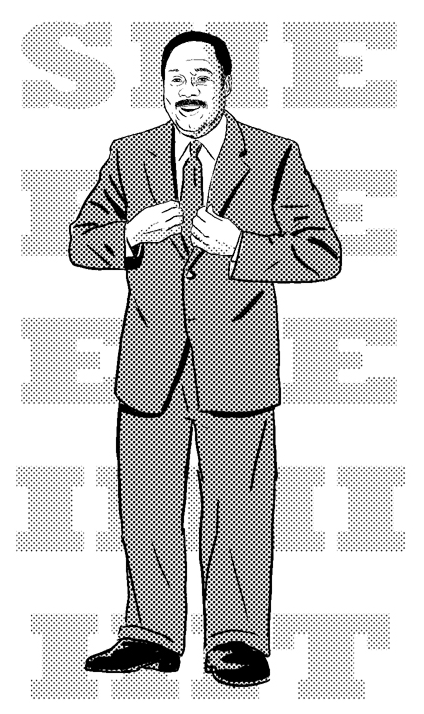
While discordian23 sets the stage to discuss issues involving class determinism, the following users don’t take the bait. This post quickly turns into a drug/crime discussion surrounding the show, issues surrounding class are avoided. When class is mentioned again, later in the post, it is no longer in relation to the show, rather, it is a critique about American politics. Instead, discordian23’s post quickly turned into a discussion surround drug legalization and crime rates.
Once class is discussed in the thread, The Wire is nowhere in sight. This thread could have been posted on virtually any message board; readers would never have known it was a Wire message board if it weren’t for the title. User m2thebrades had this to say regarding class [sic]:
The upper upper class
The middle class that's scared as hell of becoming the underclass
the underclass stuck in a rut (IMDB 2011)
It seems that the users are able to discuss the topic of class, but have a hard time recognizing it in texts, especially that of The Wire.
More directly to my overarching point is an example of IMDB user George Parker:
Telling of a motley bunch of detectives who set about to bring down a Baltimore drug ring which supplies a black innercity housing project, the gritty 12 hour first year series slowly develops a broad range of characters from street punks to senators (IMDB 2011)
This is the kind of masking that provides the point. George Parker uses the term “black” when, presumably he means “lower class.” There is nothing necessarily ‘black’ about inner-city housing projects, despite the overwhelming number of blacks who might live there.
A YouTube discussion over a trailer of the fourth season led user @yobiworld07 and Notebookwriter1 to state:
yobiwolrd07:
Them Award shows are racist. Anytime there is an all black show with brilliant writing. We never get recondition. instead Rubbish like Grey Anatomy get all the awards. PLAIN STUPID
Notebookwriter1:
Doesn't even have anything to do with race. Grey's Anatomy IIRC is a very diverse show in race, and wins NAACP wards as well. The Wire has NEVER been nominated for an NAACP award.
yobiwolrd07:
Tell me who does the show focus on? HINT IT'S NOT that latin chick or that asain women. Its the Ellen Pompeo Patrick Dempsey they are ones in most of the magazines. They ones being interviewed. This show may be divers but they there focuse is he WHITE CAST.
Notebookwriter1:
Well listen, either way it's a complete crime that the NAACP ignored The Wire thinking it was just another hood story when it's so much more. The Wire has depicted black people more real than any Tyler Perry show, or movie (YouTube 2010).
Nowhere in the discussion does the concept of class emerge. Such exchanges are typical; the general dialogue centers on issues of race, violence, and drugs, but it rarely swings around to economic determination. Are Americans capable of seeing class?
Americans have had a tumultuous relationship with our racial segregation and treatment of racial minorities. From slavery to Jim Crow laws, these are aspects of American history which embarrass most Americans. But despite George Parker’s, no doubt, best intentions, the confusion of the term ‘black’ with ‘lower class’ is one that we cannot continue to make. And while television critics seem to be making this distinction, the greater viewing public must also follow suit if we are to transgress our past. Perhaps these critics are more savvy to race and class discussions in texts. Perhaps they are more educated, in general. Perhaps these critics are more apt to carefully watch their words before typing or speaking. Or, perhaps I am wrong. Perhaps the critics are just as guilty as the general viewers of masking class issues. All of these are possibilities, and while it becomes almost impossible to read every last sentence written about the show, and even more impossible to understand the intentions behind every utterance, an understanding can be reached. My research has lead me to believe that I have achieved such an understanding, and that the American television watching public must learn to separate issues of class from other critiques of society.
4. The Finale/Closing Credits
I think it becomes important to point out that the overall impact of television critics may not be as socially important as some might think. That is to say, it doesn’t seem likely that American television audiences are taking their cultural studies cues from television critics.
This study serves as only the beginning of a tremendous amount of research on the subject of the way in which audiences are able to view class through the television medium. Future studies will be necessary to shore up questions which are still plaguing. Perhaps a more quantitative analysis of critics’ reviews and audience perceptions could be designed, however, that is outside the scope of this study. Moreover, a stronger understanding is needed in which to answer the question of critical influences on the general television public. Such information would be most helpful in determining if, in fact, audiences take their cues from critics.
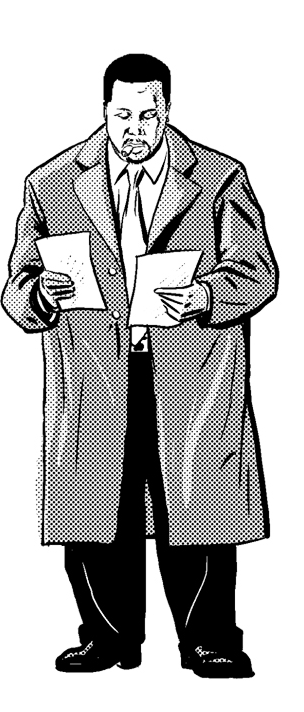
To insist that class-related issues are actually issues of race is a fallacy which only serves to further integrate minorities into a life of poverty which will continue for generations. The American Scene reviewer Reihan Salam put it best:
But here’s the thing: who is allowed to be a subject or an agent? When upper-middle-class people watch The Wire, is it spurring them to constructive heights of weight guilt or even a meaningful expansion of the moral imagination? Or it a salve for their conscience? And if it’s the latter, perhaps a stance of basic respect — residents of the inner-city are human beings who are at some basic level responsible for their own lives — might be preferable. It occurs to me that this view sounds shocking in the context of deeply-ingrained luck egalitarianism (among intellectuals and the intellectually-inclined). But it reminds me of the extraordinary findings about victims of sexual abuse, evidence that politicians (and in particular conservative Republicans) have tried to suppress or condemn: people are extraordinarily resilient, even, perhaps particularly, those we think of as the ur-victims. The stance of nonjudgmentalism, of understanding and pity and inegalitarian compassion, seems to do little good (Salam 2008).
Television shows such as The Wire serve to bring a discussion to the forefront of American dialogue which would never have been there otherwise. And that, is what’s good for America.
Works Cited
"American Idol (TV Series 2002– ) - IMDb." The Internet Movie Database (IMDb). Web. 09 June 2011. <http://www.imdb.com/title/tt0319931/>.
"The Bachelor (TV Series 2002– ) - IMDb." The Internet Movie Database (IMDb). Web. 09 June 2011. <http://www.imdb.com/title/tt0313038/>.
Burchfield, Thomas. "15 Reasons You Should Watch The Wire (All True and Unarguable!) | Red Room." Red Room | Where the Writers Are. 23 June 2009. Web. 06 Mar. 2011. <http://www.redroom.com/blog/thomas-burchfield/15-reasons-you-should-watch-the-wire-all-true-and-unarguable>.
"Curb Your Enthusiasm (TV Series 2000– ) - IMDb." The Internet Movie Database (IMDb). Web. 09 June 2011. <http://www.imdb.com/title/tt0264235/>.
Dietz, Jason. "The Best TV Shows of 2009 … and the Decade - Metacritic." Movie Articles, Game Articles, Music Articles, TV Articles - Metacritic. 2 Jan. 2010. Web. 09 June 2011. <http://features.metacritic.com/features/2010/best-tv-of-2009-and-the-decade/>.
Estes, Mark O. "TV Critics Vs. TV Viewers? Not Quite… – An Analysis." TVOvermind – If It’s On, It’s Here. 20 Jan. 2011. Web. 09 June 2011. <http://tvovermind.zap2it.com/tv-news/viewers-vs-tv-critics/37654>.
Evans, Erin E. "Googling ‘The Wire’." Home | The Root. 9 Mar. 2009. Web. 06 Mar. 2011. <http://www.theroot.com/views/googling-wire>.
"Firefly (TV Series 2002–2003) - IMDb." The Internet Movie Database (IMDb). Web. 09 June 2011. <http://www.imdb.com/title/tt0303461/>.
Foucault, Michel. Method. 1981. Cultural Theory and Popular Culture: a Reader. Harlow, England: Pearson Longman, 2009. 313-19. Print.
Goodman, Tim. "Yes, HBO's 'Wire' Is Challenging. It's Also a Masterpiece. - SFGate." Featured Articles From The SFGate. 06 Sept. 2006. Web. 09 June 2011. <http://articles.sfgate.com/2006-09-06/entertainment/17312122_1_wire-storytelling-desperate-housewives>.
"Grace Under Fire (TV Series 1993–1998) - IMDb." The Internet Movie Database (IMDb). Web. 09 June 2011. <http://www.imdb.com/title/tt0106017/>.
Gray, Herman. "The Politics of Representation in Network Television." Watching Race: Television and the Struggle for 'Blackness' Minneapolis: University of Minnesota, 1995. 70-92. Print. Media and Cultural Studies: Keyworks. Blackwell. 439-61.
"Hill Street Blues (TV Series 1981–1987) - IMDb." The Internet Movie Database (IMDb). Web. 09 June 2011. <http://www.imdb.com/title/tt0081873/>.
IMDB. "IMDb :: Boards :: "The Wire" (2002) :: Did The Wire Change Your Views on Publi..." The Internet Movie Database (IMDb). 19 Jan. 2011. Web. 09 June 2011. <http://www.imdb.com/title/tt0306414/board/thread/176939311>.
Jhally, Sut, and Justin Lewis. "The Myth of the American Dream." Enlightened Racism: the Cosby Show, Audiences, and the Myth of the American Dream. Boulder: Westview, 1992. 75. Print.
Lanahan, Lawrence. "Secrets of the City." Columbia Journalism Review Jan/Feb (2008): 22-31. Print.
Manis, Shelley. "“These Are [Our] Stories”: Engaging Cultural Debate and Performing Contradictions in Law & Order." Quarterly Review of Film & Video May 26.3 (2009): 194-205. EBSCOHost. Web. 9 June 2011. <http://web.ebscohost.com.mimas.calstatela.edu/ehost/detail?vid=14&hid=25&sid=cade0194-07ed-4649-b451-f93f096f7ff8%40sessionmgr15&bdata=JnNpdGU9ZWhvc3QtbGl2ZQ%3d%3d#db=ufh&AN=37344911>.
McCabe, Bret. "Case Closed David Simon: The Wire Exit Interview." Baltimore City Paper. 12 Mar. 2008. Web. 9 June 2011. <http://www2.citypaper.com/news/story.asp?id=15437>.
Metacritic. "The Wire - Season 1 Reviews, Ratings, Credits, and More at Metacritic." Metacritic - Movie Reviews, TV Reviews, Game Reviews, and Music Reviews. Web. 09 June 2011. <http://www.metacritic.com/tv/the-wire/season-1>.
"Miami Vice (TV Series 1984–1990) - IMDb." The Internet Movie Database (IMDb). Web. 09 June 2011. <http://www.imdb.com/title/tt0086759/>.
Morris, Barbra S. "The Television Generation: Couch Potatoes or Informed Critics?" The English Journal December 78.8 (1989): 35-41. JSTOR. Web. 9 June 2011. <http://www.jstor.org/pss/819482>.
"My Name Is Earl (TV Series 2005–2009) - IMDb." The Internet Movie Database (IMDb). Web. 09 June 2011. <http://www.imdb.com/title/tt0460091/>.
"Oz (TV Series 1997–2003) - IMDb." The Internet Movie Database (IMDb). Web. 09 June 2011. <http://www.imdb.com/title/tt0118421/>.
"Roseanne (TV Series 1988–1997) - IMDb." The Internet Movie Database (IMDb). Web. 09 June 2011. <http://www.imdb.com/title/tt0094540/>.
Salam, Reihan. "The Bleakness of The Wire." The American Scene. 1 Jan. 2008. Web. 09 June 2011. <http://www.theamericanscene.com/2008/01/01/the-bleakness-of-the-wire>.
"Sex and the City (TV Series 1998–2004) - IMDb." The Internet Movie Database (IMDb). Web. 09 June 2011. <http://www.imdb.com/title/tt0159206/>.
"The Shield (TV Series 2002–2008) - IMDb." The Internet Movie Database (IMDb). Web. 09 June 2011. <http://www.imdb.com/title/tt0286486/>.
"The Sopranos (TV Series 1999–2007) - IMDb." The Internet Movie Database (IMDb). Web. 09 June 2011. <http://www.imdb.com/title/tt0141842/>.
Touil, Nadia. "Consumer Evaluations of Movies on the Basis of Critics' Judgments." Psychology and Marketing December 16.8 (1999): 677-94. Wiley Online Library. Web. 9 June 2011. <http://onlinelibrary.wiley.com/doi/10.1002/(SICI)1520-6793(199912)16:8%3C677::AID-MAR4%3E3.0.CO;2-T/abstract>.
Traister, Rebecca, and Laura Miller. "The Best TV Show of All Time - Laura Miller - Salon.com." Salon.com - Salon.com. 15 Sept. 2007. Web. 06 Mar. 2011. <http://www.salon.com/entertainment/tv/feature/2007/09/15/best_show>.
The Wire HBO Fan Club. "The Wire HBO Fan Club Blog." The Wire HBO Fan Club. Web. 9 June 2011. <http://thewire-hbo.com/2007/04/03/so-this-is-it-the-only-jimmy-mcnulty-fan-club-god-damn-shame-on-you/>.
"The Wire (TV Series 2002–2008) - IMDb." The Internet Movie Database (IMDb). Web. 09 June 2011. <http://www.imdb.com/title/tt0306414/>.
Xu, Janice Hua. "Brand-new Lifestyle: Consumer-oriented Programmes on Chinese Television." Media, Culture & Society May 29.3 (2007): 363-76. EBSCOHost. Web. 9 June 2011. <http://web.ebscohost.com.mimas.calstatela.edu/ehost/detail?vid=26&hid=25&sid=cade0194-07ed-4649-b451-f93f096f7ff8%40sessionmgr15&bdata=JnNpdGU9ZWhvc3QtbGl2ZQ%3d%3d#db=ufh&AN=25237793>.
YouTube. "The Wire - Season Four Trailer Message Boards." YouTube - Broadcast Yourself. Web. 09 June 2011. <http://www.youtube.com/all_comments?v=dg94rUtzkz8>.